
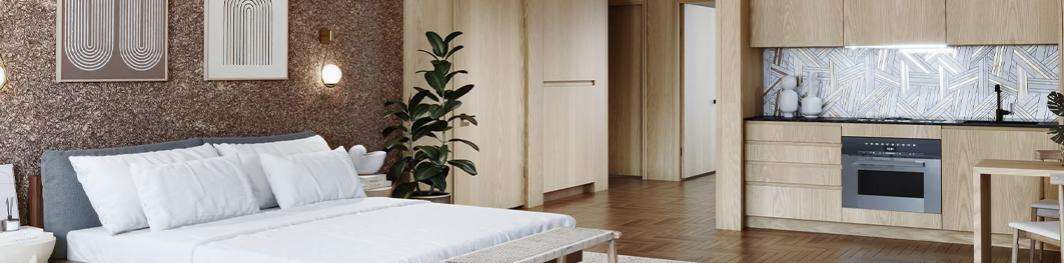
Why Materiality Matters More Than Ever in Interior Design
Great design is about more than what the eye can see...
Walk into a memorable space and your first impression rarely comes from color alone.
You notice the warmth of a wood surface. The softness of a matte finish. The way natural light moves across textured materials throughout the day. The subtle contrast between smooth and tactile surfaces. Even the quietness of a room can influence how comfortable and inviting it feels.
These are all expressions of materiality.
While color palettes and furniture styles often receive the most attention, the materials themselves are what give an interior its depth, personality, and emotional impact. They transform a room from something that simply looks beautiful into a place people genuinely want to experience.
As today's design inspiration becomes increasingly digital, materiality has never been more important.
What is materiality in interior design?
Materiality is the intentional selection and combination of materials to shape both the appearance and experience of a space.
It considers much more than aesthetics. Texture, finish, reflectivity, durability, scale, acoustics, and even the emotional response materials evoke all contribute to how an environment feels.
Two interiors may share similar layouts, furniture, and color palettes, yet feel completely different because of the materials chosen to bring them to life.
One may feel warm and welcoming.
Another may feel sterile.
One encourages people to linger.
Another encourages them to move on.
The difference often comes down to materiality.
Screens can't capture the whole story.
Interior designers have access to more inspiration than ever before.
Pinterest boards, Instagram reels, online portfolios, AI-generated concepts, and digital mood boards have accelerated creativity in remarkable ways.
Yet every digital image has the same limitation.
It reduces a three-dimensional experience into a two-dimensional photograph.
Screens cannot fully communicate:
- tactile warmth
- finish depth
- subtle texture variation
- changing light throughout the day
- the relationship between neighboring materials
- the feeling of touching a surface
- the atmosphere created by sound absorption and reflection
As a result, interiors designed primarily from digital references can sometimes appear complete online while lacking richness in person.
The most memorable environments succeed because they offer experiences that cannot be captured through a screen.
How materials make us feel...
People rarely remember every piece of furniture in a room.
They remember how the room made them feel.
Comfortable.
Inspired.
Calm.
Creative.
Confident.
Welcomed.
Those emotions are shaped by countless material decisions working together.
Soft matte finishes reduce visual harshness.
Natural textures create familiarity.
Layered surfaces add depth.
Subtle variations encourage curiosity.
Organic elements strengthen our connection to nature.
These details are often quiet individually, but together they establish the personality of a space.
Design becomes memorable not because every element demands attention, but because every element contributes to a cohesive experience.
Texture is the new statement piece (and it's quietly doing the heavy lifting).
As visual trends spread faster online, texture has become one of the strongest ways designers create originality.
Texture slows people down.
It encourages closer observation.
It rewards interaction.
It reveals details that photography often misses.
Whether expressed through architectural wood visuals, natural fibers, dimensional surfaces, or organic materials, texture helps transform interiors from visually appealing environments into immersive experiences.
It also introduces authenticity.
Natural variation reminds us that every surface has character, allowing projects to feel less manufactured and more connected to the people who use them.
Looks are only half the story...
Choosing materials is no longer simply a matter of matching colors.
Today's designers are balancing multiple priorities simultaneously.
They consider:
- durability
- maintenance
- lighting conditions
- acoustic performance
- tactile interaction
- sustainability
- wellness
- emotional response
The strongest material palettes solve functional challenges while enriching the overall experience.
Instead of asking, "Does this material look right?"
Many designers now ask:
"Does this material support how people will use this space?"
That subtle shift changes everything.
Five examples of materiality in action.
Different materials create different experiences.
Natural Materials
Organic textures and authentic finishes create warmth while helping interiors feel grounded and timeless.
Natural Materials demonstrate how biophilic inspiration can strengthen the connection between people and the spaces they occupy.
Veneer-Art
Layered wood visuals introduce subtle movement and depth without overwhelming an interior.
Rather than acting as statement pieces, they contribute quietly to the overall narrative of a space.
SuperOrganic
Real florals, petals, leaves, and natural materials introduce texture that feels genuinely unexpected.
Their natural variation encourages people to pause, explore, and engage more closely with their surroundings.
Acoustic
Materiality extends beyond what we see.
Acoustic surfaces combine the warmth of real wood veneer with sound performance, helping create environments that feel calmer, quieter, and more comfortable for the people using them.
Concrete
Authenticity doesn't require using materials exactly as expected.
Concrete-inspired architectural panels demonstrate how familiar materials can be interpreted in new ways while maintaining the substantial character and visual honesty designers value.
So where is the interior design world headed next?
The future of interior design is unlikely to be defined by louder aesthetics or faster-changing trends.
Instead, designers are placing greater emphasis on creating environments that feel authentic, layered, and deeply human.
That means considering every aspect of how people experience a space.
What they touch.
What they hear.
How light becomes a dynamic design detail.
How surfaces age.
How textures invite interaction.
How materials support comfort, wellbeing, and connection.
These are the qualities that create interiors with lasting relevance.
Originality lies in the details.
Every designer has access to the same inspiration platforms.
What makes one project memorable is not the inspiration itself.
It is the interpretation.
Thoughtful material selection gives designers the opportunity to create spaces that move beyond visual trends and become meaningful experiences.
It develops character.
That is the enduring value of materiality.
Continue the series:
Thoughtful material selection is only part of creating a truly original environment. The way those materials are applied throughout a space is what transforms good design into memorable experiences.
In Part 3 of this series, we'll explore five practical ways designers can move beyond trend-driven inspiration by designing around emotion, storytelling, sensory experience, and the people who will ultimately use the space.
Continue reading: 5 Ways to Create More Original Interior Spaces (Without Chasing Trends)
Ready to discover materials that create more meaningful spaces?
The best way to understand materiality is to experience it firsthand.
Explore Laminart's collections, order samples, or connect with a local representative to see how texture, finish, and thoughtful material selection can help transform your next project.
The information below is required for social login
Sign In
Create New Account